
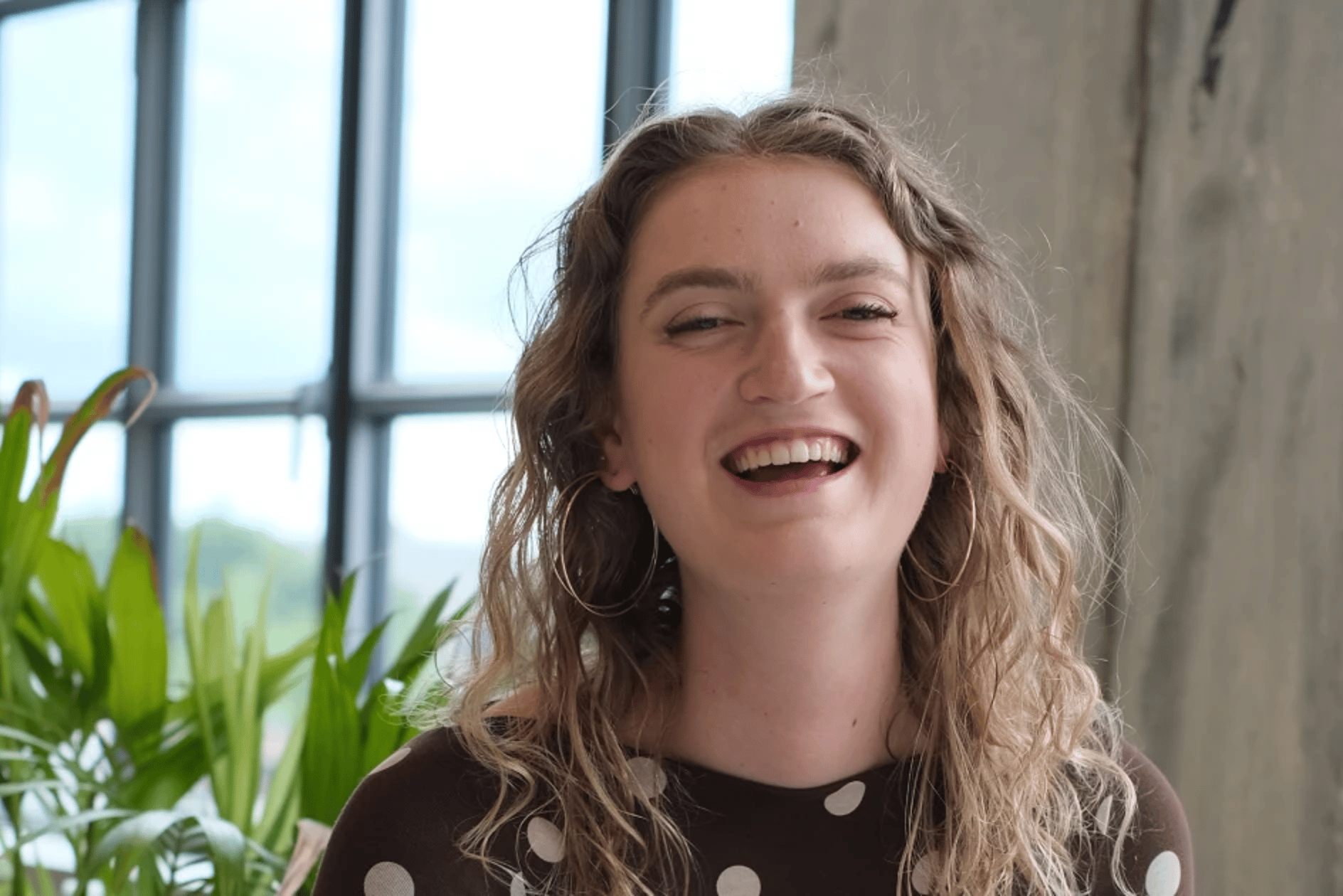
I'll be honest, I almost talked myself out of applying. When I first came across 35®, my first reaction was that it seemed a little above my level. This was a digital agency working with big clients like Greenchoice and Bose, and I wasn't really sure I had what it took. But curiosity got the better of me, so why the hell not? I sent in my portfolio. Turns out they liked it.
The first day (and the ten apps I had to download)
My first morning, I was handed a list of tools to set up: Slack, Linear, Notion, GitHub, 1Password... It felt like a lot. But, within a week it all made sense. These tools form a kind of ecosystem that keeps everything running smoothly. Linear tracks tasks, Notion holds the documentation, GitHub is where the code lives, and Slack is where your colleagues will respond to your panicked message at 11am.
The rhythm of the week helped me settle in fast. Every Monday morning, the whole team gathers around the lunch table to plan the week together. Every Friday there's a Demo Day, where anyone who wants to can show what they've been working on, followed by a quick retro and, of course, our weekend plans. It sounds simple, but knowing that structure was there made the whole thing feel a lot less chaotic.
What I actually worked on
Going into the internship, I expected to spend most of my time building front-end features. The reality ended up being much more than just that.
The first couple of weeks were intentionally structured. Every new intern starts by building a small social media application, which serves as a crash course in the tools, workflow, and development standards used throughout the company. I must admit that at the time, I was eager to jump straight into client work and didn't really see the use. But looking back, having the chance to learn the process first saved me from making a lot of avoidable mistakes later.
After that, it was time to get my hands dirty. I was brought onto real client projects, contributing to applications across web, mobile, and email. Sometimes that meant building new features, other times it meant tracking down bugs. Maybe the most valuable thing I learned was how professional software development actually happens: planning work before writing code, collaborating through pull requests, working with designers and project managers, and building software that has to function for real users rather than just pass an assignment rubric.
Not everything was coding either. Along the way I picked up what I'll call sidequests: designing onboarding screens in Figma, creating motion graphics in After Effects, and helping out wherever an extra pair of hands was needed. It turned out that these random skills I'd learned at school were actually useful.
The things nobody tells you going in
You're going to feel like you're behind, but that's fine. I was genuinely scared before I started. What if I'd forgotten everything? What if I wasn't good enough? I hadn't. I was. And the team made it very clear that asking questions wasn't just okay, it was expected. Whenever I felt stuck, nobody made me feel stupid for asking.
Feedback in a dev environment is different from school. A code review isn't personal. It's someone saying "move this function" or "remove the console log", and that's it. The first time you get feedback that's purely factual and practical, with no emotional weight attached to it, it just makes sense. You fix it, you learn, you move on.
Perfectionists might actually thrive here. I'd always seen my perfectionism as something to fix, something that slowed me down. It turns out companies actually like having an intern who thinks everything through and tries to get as close to perfect as possible. That reframing changed a lot for me. I didn't get rid of it, I just stopped letting it get the better of me.
The small stuff matters. Daily walks, having lunch together, the Friday borrel; these aren't perks, they're what make a small team work. The culture at 35® is genuinely relaxed, and being included in that from day one made a huge difference.
Tips if you're thinking about applying
Prepare something real to show. My portfolio website took me the usual blood, sweat, tears, and a lot of late nights, but it's what got me in the door.
Try and learn the basics before you arrive. I taught myself React and Tailwind as a fun summer activity. I wasn't an expert by any means, but knowing the fundamentals meant I could hit the ground running instead of starting from zero. It made the first week a lot less scary.
Keep asking questions! Nobody expects you to know everything. The only thing that slows you down is sitting stuck in silence for three hours before admitting you need help. Being curious is not a crime, it's a blessing!
What I'm walking away with
Six months. Seven-plus frameworks. Brain still functioning.
No, but honestly: I came in unsure whether I wanted to be a developer or a designer. I'm leaving knowing I can be both, and that having a foot in each world is actually a strength, not a sign of indecision. I understand databases, APIs, and authentication now. I know how to move between disciplines. I know what a real team workflow looks like. And I know that the thing which I thought was my biggest weakness, perfectionism, is something I can use for good.
If you're a student wondering whether 35® is the right place for your internship, the honest answer is: it depends on whether you want to be comfortable or whether you want to grow. I wanted to grow. Looking back, I wouldn't have changed a thing.